iSense Solutions
PUBLICDATA

Explore the latest insights, research updates, and expert perspectives to help you navigate today’s dynamic market landscape.

Study: What Romanians wear when nobody sees them

A quantitative study conducted in March 2023 by iSense Solutions for Sofiaman, a Romanian home and sleepwear brand with a long tradition, shows that 65% of Romanians wear outdated street clothes at home, which they no longer use in public, or clothes that are discolored, stained and with small flaws.

Sofiaman set out to find out what importance Romanians attach to the clothes they wear around the house or the clothes they sleep in, and also to highlight new consumer habits or behavioral trends, including in the post-pandemic context.

Ask what clothes they wear around the house,

  • 65% of Romanians opt at home for old street clothes they no longer wear in public

  • 47% of survey participants wear clothes with small defects, torn, discolored or stained

  • 44% prefer to wear sports clothes

  • 35% of those surveyed said they wear pyjamas, mainly Gen-Z and millennials, i.e. young Romanians aged between 18 and 29.

Concerning the types of clothing items purchased most often by Romanians, several times a year,

  • 70% of respondents said they most often buy clothes for sport and leisure

  • 38% office clothes

  • 18% buy clothes for events with the same frequency.

When it comes to sleep:

  • 73% of Romanians prefer to sleep in pyjamas, especially women

  • 18% choose to sleep in their underwear, mostly men, but also young people compared to other age groups

  • 36% of Gen-Zs and millennials under 29 prefer to sleep in their own clothes

  • 3% of Romanians say they sleep naked.

Asked when they last bought pyjamas, 33% of respondents said their last pyjama purchase was more than a year ago.

As for why they don’t buy pyjamas,

  • Romanians say they don’t consider sleepwear necessary

  • Prefer to spend their budget on other categories of clothes

  • Others don’t invest in pyjamas because “nobody sees them in the house” anyway.

On the basis of this study, Sofiaman wants to initiate an educational approach on the quality of clothes worn beyond the “closed” doors of our homes.

Florin Cucu, Managing Director Sofiaman: “Through this study, we wanted to find out and explore how Romanians relate to their home and sleepwear. This initiative also has an educational basis, as the choice of fibers from which our home or sleepwear is made directly contributes to our ability to regenerate after the stress of the day. This choice plays a determining role in the quality of rest or sleep and has a direct impact on our health, aspects often neglected by many of us. Whether it’s our home clothes or our sleepwear, they act as a signal to the brain and can help us to find ourselves, to connect to the source, to return to our wellspring of vitality, to the tranquility of our home and our intimate space.

In order to understand and explore the emotional side of consumers, Sofiaman used data and qualitative aspects. The habit of sleeping in pyjamas is a childhood ritual that induces a state of ‘calm’. With working from home, Romanians have spent more time in their pyjamas, identifying the need to buy more different home clothes.

The qualitative analysis shows that pajamas are associated with “relaxation and comfort”. When they want to have a carefree day, Romanians “don’t get out of their pyjamas”; and when they have to sleep in their day clothes, they find themselves “in a state of alertness”.

For more details about the survey data you can access home.sofiaman.ro

The Omnibus quantitative survey was conducted by iSense Solutions at national level, between March 24-28 this year, on a sample of 1190 people, consisting of urban men and women, aged between 18 and 65.

As for the qualitative study, the information was obtained by Sofiaman using data provided by Strategis RBC. The qualitative survey in April 2021 was conducted through focus groups of urban women and men aged 30-55.

Sofiaman is a long-established Romanian brand known for its quality home and sleepwear. Sofiaman products are made from botanical fibers such as cotton, flax, bamboo, eucalyptus and beech (modal), natural materials with international certifications, chosen for their unique properties and attributes. Sofiaman’s story began with a simple cotton pajama, produced more than 25 years ago in a tailor’s workshop in the village of Șoimănești, Neamț County. Sofiaman currently has a nationwide network of 19 stores and over 300 local distributors, as well as its own production facility. Based on the brand positioning “Home deserves the best”, the comfort and rest that every person should feel when wearing home or sleepwear are at the heart of every Sofiaman collection. From the way they are created, to the tailoring technique and the mood they create when worn, Sofiaman products are designed to enhance the quality of your sleep and moments at home.
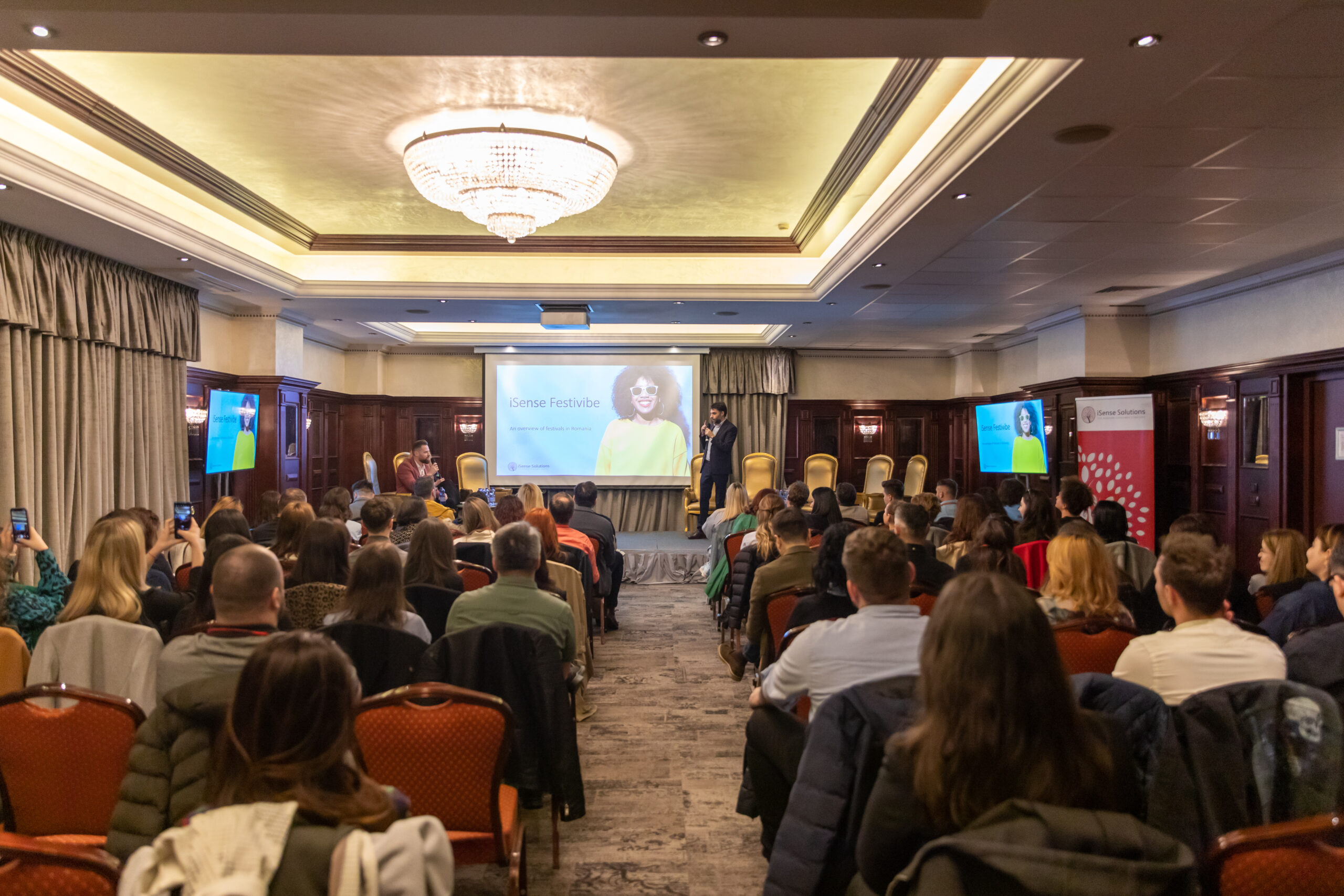

Double the number of Romanians planning to attend this year’s music festivals

On March 14 at the Ramada North Hotel in Bucharest, representatives of the most famous festivals in Romania – UNTOLD, Electric Castle, Nostalgia Retro/Disco/Future, Beach, Please!, Open Air – Blues Festival, Brezoi – met at the Music Festivals – Innovative Engagement Opportunities by Festivibe event organized by the market research agency iSense Solutions.

Market research agency iSense Solutions assesses the impact of the activities that brands carry out at festivals using a dedicated research tool: iSense Festivibe. It profiles attendees, measuring their whole experience during the festival, what were the most memorable activities, which brands they noticed and which were the most interactive moments.

The full report contains data and information on the level of satisfaction among festival attendees, participation intentions, amounts allocated for such events, as well as their expectations, both from the organizers and the brands present.

The survey data shows that Romanians are big consumers of festivals, know about them and attend them. Asked which Romanian festivals they know, they mentioned: UNTOLD (97%), Neversea (90%), Electric Castle (83%), SAGA Festival (52%), Summer Well (52%), Sunwaves (23%), Nostalgia Retro-Disco-Future (22%), Beach, Please! (12%), Open Air Blue Air Blues Festival (12%), Massif (10%).

Compared to last year, the intention to attend festivals has doubled, which confirms that Romanians appreciate music festivals. At the same time, there is a very good long-term memorability of the activities they see at festivals, and this should be the key to the strategy of the sponsoring companies at such events“says Andrei Canda, Managing Partner, iSense Solutions.

iss 033

Most festivals take place over several days and attendees can choose from several types of tickets, depending on their preferences or line-up. 43% of Romanians say they will buy a day ticket, 38% a season ticket and 13% say they will go by invitation.

In terms of the budget they plan to allocate to each festival in 2023, excluding the cost of the ticket, transportation and accommodation, Romanians say they will spend on average 542 lei, mentioning a maximum of 816 lei and a minimum of 391 lei, depending on the festival, which they will use for food and drink or other activities within the festival.

During the panel discussion at the event, representatives of the biggest music festivals in Romania discussed how the Romanian event industry has evolved in direct proportion to the interest of Romanians for such events and the business opportunities that are growing for companies that choose to partner with festival organizers.

We started from a simple premise: quality is not an act, it is a habit of our organization. Since the very first edition of the events we organize, we have managed to create a pattern, we have combined a quality standard of organization with unique festival experiences.
In recent years we have actively taken a leadership role in entertainment, but we also have a strong impact on education and innovation in the industry. We have strategic partners with whom we develop these new ideas, concepts and projects. As an organization, we position ourselves as trend-setters and continue to expand nationally and internationally. By the end of 2024 we will launch other unique projects in the UNTOLD Universe“said Flavia Gherman, Head of Partnerships, UNTOLD.

Festival-goers want memorable moments and experiences during events, they appreciate and participate in creative brand activations, and organizers are tasked with devising a successful strategy to create notoriety.

I firmly believe that festivals are increasingly important in the marketing mix of brands. Because festivals are often the best context for people (relaxed and in a good mood) to perceive brand messages“, says Cristian China-Birta, Founder and Associate Kooperativa 2.0 and Marketing Director of the Open Air – Blues Festival, Brezoi.

As shown by the data presented in the iSense Festivibe study, Romanians have regained their energy and desire for fun and want to have as many options as possible, and organizers are coming to meet their wishes.After 2 years of pandemonium and staying at home, my generation, more than ever, needs quality entertainment, needs unique experiences, and this year’s festival line-up is a very solid one, which meets this need, very clearly visible in the market. As for us, we have greatly expanded the festival since the first edition we had last year, we have an investment of 4 million euro and we are bringing artists who have never been to Romania, such as CENTRAL CEE, 6IX9INE, NLE CHOPPA, DABABY and many others, which we will announce soon. We estimate a traffic of around 160 thousand people at this year’s festival, which will take place over 4 days from April 27-30, and we believe we will give them the best possible experience. We’re working hard in the last hundred meters to make the festival not only the safest, but also the most fun and full of cool activities that young people will enjoy“, said Andrei Șelaru, CoFounder & Head of Marketing Beach, Please!.

So a summer full of festivals and fun for all ages and music genres is in store, and that means an unmissable business opportunity for companies. Romanians pay attention, evaluate and appreciate the moments and attractions of these events.

The data is part of the iSense Festivibe study. It involves a complex methodology pre-in-post, before, during and after the festival. The pre-festivals survey was conducted in February 2023 on a sample of 2500 respondents: 1500 respondents, online representative for urban, population 18-65, +1000 festival attendees, maximum margin of error +/- 2.53% at 95% confidence level. Data during the festival is collected qualitatively, through online community and ethnographic observations, and data after the festival is collected through face-to-face interviews after the festival and online.

Over 70% of Romanians are affected by price hikes for medicines and medical services, and most expect education and support from the pharmaceutical industry

Initiative, Medic One and Path, Lowe Group’s unit specializing in data analysis and interpretation, together with iSense Solutions, have conducted a new BOLD branded study, a concept launched by the communications group in 2018, in which they analyzed how Romanians rethink their health in the face of an economic crisis.

The study reveals valuable insights into how Romanians feel the current economic context and the changes taking place are influencing the management of their health. The results of the study support companies and brands in the pharmaceutical industry with a series of conclusions that point to the needs of consumers and how to ensure that an economic crisis does not become a health crisis.

We wanted to understand if and how the current context is changing the behavior and attitudes of Romanians when it comes to their health. The data also shows us that they need and expect education and support from medical and pharmaceutical companies. And in this regard, we can support our partners, through an approach that focuses on in-depth analysis, anchored in the consumer’s reality, with best practices in digital as well as offline strategies, and customized solutions for integrating sales platforms on brands’ websites “said Andreea Dinescu, Deputy Managing Director, Initiative Romania.

Respondents in this survey indicate that they prefer other types of brand support at this time, perhaps even more valuable in the long term. Romanians need education and information on health issues, with verified information from reliable and trustworthy sources – this is where companies can play a very relevant role. On the other hand, we are witnessing a shift in health mindsets: from reactive (treatment-oriented) to proactive (prevention-oriented); from transactional (only prices and offers matter) to relational (brands can be more than just a source of products/services). All these changes represent new communication opportunities for healthcare brands, which can address needs and wants without eroding their price margins but at the same time develop a more than transactional relationship with consumers “said Oana Cociașu, Managing Partner, Medic One.

As a result of this study, with the help of Path we discovered many relevant insights. Caregivers, especially women, are the category with the highest potential for purchases, as well as vocal support for a cause or brand. We are also seeing a shift in Romanians’ attitudes towards health as a state of wellbeing rather than the absence of illness “said Roxana Bleoajă, Head of Path, Lowe Group.

In order to conduct this study we collected the answers of 1,006 Romanians, and taking into account the results, we can see that financial pressure exists, is felt by Romanians and has an impact on the choices they make regarding the management of their health“, said Traian Năstase, Managing Partner, iSense Solutions.

According to the survey, half of Romanians have noticed a deterioration in their financial situation in the past year, and 4 out of 10 expect it to worsen in the next six months. 38% of the respondents spend more than 11% of their monthly budget on medical products and services, and the behavior is more pronounced among those suffering from a chronic condition (47%) and their caregivers (54%).

More than 70% of respondents say they are affected to a great or very great extent by price increases for medicines and medical investigations or consultations – particularly women and people caring for chronic patients. The most common solutions adopted to protect themselves from price increases are dictated by the trio “discount, bare necessities, forgo”.

4% of respondents prioritize spending on medications and 2% prioritize spending on medical services at the level of a typical month. In the past 6 months, 45% have received prescriptions that are too expensive for their budget, and 47% have resorted to a financial effort to follow the prescription exactly. 17% of chronics and 11% of caregivers have given up or postponed the purchase.

The survey also recorded a considerable proportion of people (approx. 40%) expecting education, support and social solidarity measures through actions by the healthcare industry. We are also witnessing a shift in the health mindset – from treatment-oriented to prevention-oriented or from the importance of prices and offers to brands that can be more than a source of products or services.

The survey was conducted in December 2022 at national level, on a representative sample of 1,006 urban internet user respondents (48% men and 52% women) aged 18 to 65 years from the iSense Solutions panel.

About the Initiative

Initiative is one of the largest independent media networks in the world, providing specialized media planning and buying, media strategy, media consulting and new media services.

Initiative is a member of the Interpublic Group of Companies and is affiliated to the international network Initiative Worldwide. In Romania, Initiative is a member of the group of companies which also includes MullenLowe, Golin and Medic One.

For more information please visit: https://www.mediafactbook.ro, Facebook or LinkedIn.

About Medic One

Medic One was founded in 1999 by Dr. Oana Cociașu, Veronica Savanciuc and other partners, being the first full service agency specialized in marketing and medical communication in Romania. Medic One provides consultancy, strategy, creation and implementation of integrated offline and online medical communication campaigns for both local and international markets. The agency’s campaigns and projects are national and international multi-award winners at festivals such as the EMEA Sabre Awards, EFFIE, IAB Mixx Awards, ADC*Ro, PR Awards and Cristal Festival. Medic One is a member of the Lowe Group communications group which also includes Initiative, Mullen and Golin. For more information, visit www.medicone.ro

About Path

Path is Lowe Group’s specialist data analysis and interpretation unit, created in response to the need for businesses to adapt quickly to the speed at which consumer behavior is changing.
Path integrates a comprehensive suite of local and international tools and data sources, available across the group’s network of agencies, that address all communications disciplines.

About iSense Solutions

iSense Solutions – The Modern Consumer Company – uses the most innovative methods to explore and analyze the modern consumer. Founded in 2014, the company offers comprehensive market research services and brings a mix of innovation and efficiency to clients.

More information can be found at www.isensesolutions.ro, www.researchromania.ro, www.sensepanels.com and www.sensecommunities.com.

2023 plans: 63% of Romanians want to take better care of themselves in 2023

What resolutions do Romanians have for 2023?

The beginning of the year is an ideal time to focus more on the personal sphere and create a list of resolutions. More Romanians felt the need to set resolutions in 2023. Thus, 54% of urban Romanians, internet users, say they have a list of resolutions for 2023, compared to last year when 48% had one. In terms of fulfilling their 2022 resolutions, 39% of Romanians have accomplished more than half of them and only 6% have ticked all of them, the latest iSense Solutions survey shows.

At the top of the most important resolutions on Romanians’ lists are to take better care of themselves (63%), enjoy life more (62%), save money (58%), spend more time with family (55%), eat healthier (55%), do more sport (53%) and travel more (52%).

Compared to men, women want to read more (54% vs. 40%), take better care of themselves (70% vs. 55%) and volunteer (25% vs. 11%). 46-65 year olds also place significantly more importance on eating healthier (68% vs. 27% total sample) and taking care of themselves (77% vs. 27% total sample), while for 18-29 year olds the resolution that weighs more is learning new things (64% vs. 27% total sample).

aman tyagi wvaoRleAskM unsplash

The resolutions that weigh the least on the Romanians’ list are related to: reducing alcohol consumption (9%), starting their own business (8%) and volunteering (10%).

Do we still believe in superstition?

When it comes to superstitions, Romanians respected the following ones at the turn of the year: keeping money in your pocket at the turn of the year (48%), eating fish (43%), wearing the color red (35%), avoiding spending on the first day of the year (22%), eating 12 grapes (22%), wearing a new item of clothing (20%) and avoiding borrowing money (18%).

However, 3 in 10 Romanians say they don’t believe in superstitions, and men tend to be more skeptical on the subject than women (33% vs. 23%).

33% of Romanians want to change jobs

In 2023, the plans Romanians have are to remodel their home (61%), change jobs (33%), get life insurance for themselves (31%) and their family (31%), buy a car (27%), buy a house (22%) and move out of the country (14%). The profile of those planning to move out of the country is made up of both men and women, with significantly more in the 18-45 age group (33%). When it comes to household size, 33% of the total sample (509 people) live alone. 3 out of 10 people who do are unskilled workers, and marital status indicates that they are more likely to be single (22%) than in a relationship (11%).

2 out of 10 Romanian internet users in urban areas plan to buy a home. Of these, 38% plan to buy their home with a loan.

When it comes to buying a car, 27% of Romanians plan to buy one, with the preferred method of payment being cash (35%), followed by credit (34%).

People in the 30-45 age bracket plan significantly more to buy a home (30%) or a car (35%) than those in the other age brackets.

The data presented is part of the iSense Solutions Omnibus, a weekly survey representative of the urban Internet-using population. The survey was conducted on a sample of 509 respondents, maximum margin of error +/- 4.2%, at a 95% confidence level, from January 4-9, 2023.

Study: Family Meals Contribute to Strengthening the Family

Family meals contribute to strengthening the family, providing an environment in which members feel protected and much more open to communication. According to a national study conducted by the Delikat brand in collaboration with iSense Solutions, Romanians eat meals with their family less often than they would like, most frequently on weekends, even though they are aware of the benefits it brings, considering it an essential aspect of their lives.

Eating at home, together with loved ones, means more than just how we prepare recipes and set the table; it represents a true family experience. Moreover, family meals have a special significance as they offer an opportunity to reconnect and communicate with loved ones. That is why, with the new Delikat platform, we set out to launch a manifesto campaign, through which more and more Romanians become aware of the importance of family meals and take advantage of every opportunity to gather with their family at the table. To draw attention to the current social context and to promote the benefits of family meals nationwide, we aim to mark for Romanians the National Day of Family Meals, declared Andreea Bobeș, Category Manager Savoury & Dressings (Unilever).

The study conducted by the Delikat brand at the national level reveals a series of important aspects regarding the behavior and habits of Romanians concerning family meals. According to the study, on average, Romanians eat with their family 6 times a week. For couples with children, a family meal is considered a moment attended by the nuclear family members: the couple and the child/children. The couple’s parents also participate in family meals or weekend gatherings, especially if they live with them or take care of the children. The most common participants at family meals are partners (husband/wife, boyfriend/girlfriend) at 50%, children at 43%, and parents at 44%. Lower frequencies at family meals are recorded for siblings (25%), in-laws (11%), grandparents (10%), uncles/aunts (8%), and daughters/sons-in-law (6%). Interestingly, in urban areas, friends also participate in family meals, at a rate of 20%.

The changing dynamics of society also influence the picture of family meals. Although in smaller proportions, colleagues from work/school (6%), cousins (5%), and even neighbors (4%) also participate in family meals.

Young people and adults aged between 18 and 45 eat with their family more often than average during the week (24% vs. 17%), as do families with children (22% vs. 17%). The weekend remains dedicated to family meals, but they occur more often on Sundays than on Saturdays, 53% vs. 31%.

The study initiated by Delikat also highlighted that the main family meal during the week is dinner, which, compared to breakfast and lunch, is a freshly cooked meal, containing heavier foods (such as meat and fried potatoes).

The busy schedules of Romanians also impact the type of family meals. Most Romanians most often have dinner with their family during the week (80%), while on weekends, they have lunch with their family more frequently (88%). During the day, family members eat separately, at work, at school, at home, or at restaurants, characterized by haste and time pressure (people have to get to or return to work, school, etc.).

Although the frequency of family meals is significant, 40% of Romanians would like to gather with their family at the table more often. Among the barriers identified in having family meals are: the difficulty of gathering family members (55%), lack of time (39%), long working hours (38%), and the lack of a regular/common meal schedule for all family members (35%).

The barriers are mainly related to the different schedules of family members: parents work in shifts, do overtime, children go to school/kindergarten, are involved in extracurricular activities, and if there are several children in the household of different ages, they usually have different school schedules.

According to the national study, when Romanians eat with their family, they feel fulfilled (73%), happy (72%), confident (61%), and calm (58%). On the other hand, when Romanians eat alone, they feel rushed (59%), uneasy (32%), stressed (28%), and tense (26%). Perhaps the most important result of the study is that 83% of Romanians consider family meals important, and among the most frequently mentioned benefits are: improving communication between family members (94%), providing an opportunity to spend time with the family (94%), and offering a sense of safety and unity (91%).

The study was carried out with the support of the iSense Solutions agency in two stages: quantitative and qualitative. The quantitative component included a sample of 640 respondents with national representativeness (urban 67% & rural 33%), aged between 18 and 65 years (50% men & 50% women). The average number of family members was 3, and the average number of children per family is 1. In the qualitative component, an online journal was conducted to document, over 7 days, the meals of 6 families (3 from urban and 3 from rural areas), using a mobile application – Indeemo – to explore and understand through images and video clips how their family meals take place.

Details can be viewed in the infographic: Family Meals Study Delikat & iSense Solutions, by accessing the link: https://isensesolutions.com/infografic-studiu-mese-in-familie-delikatisense-solutions/

About iSense Solutions

iSense Solutions – The Modern Consumer Company uses the latest technologies to survey the modern Romanian consumer and offers integrated marketing services: research, marketing and communication consultancy, digital, and sales. The company was founded by Traian Năstase and Andrei Cânda, specialists with over 12 years of experience in market research and a solid academic background, being doctors in Sociology and Marketing, respectively. More information can be found at www.isensesolutions.ro and www.researchromania.ro.

Contact

Get Connected

Reach out today for a personalized consultation and discover how we can help you achieve your goals.

Let’s discuss about your business

Reach out today for a personalized consultation – let’s explore how we can support your goals.

Book a Call

Tell Us About Your Research Needs

Our innovative research tools deliver clear insights and effective strategies tailored to your needs.

Request Your Analysis

Let’s Build Your Marketing Strategy

We create personalized marketing strategies designed to drive engagement and real results.

Request Your Strategy

Understand Your Consumers Better

We’ll uncover key insights and help you optimize performance across the board.

Discover How We Can Help

CALL: +40 773 835 659

Contact